

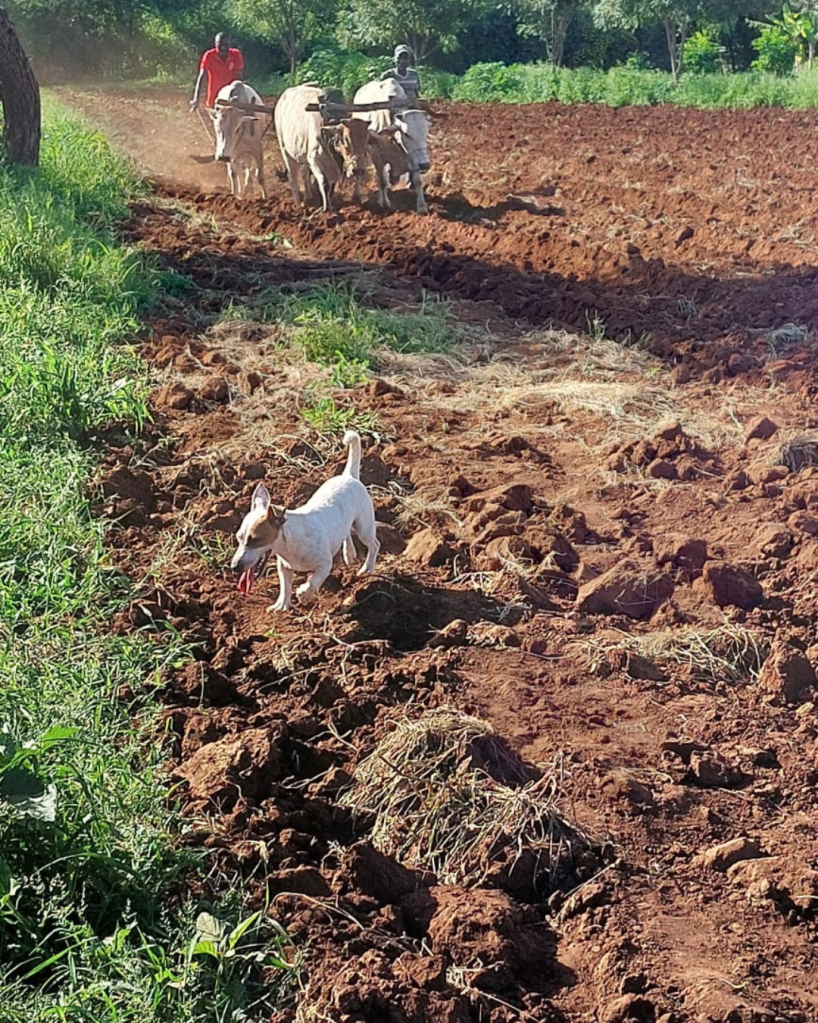
The first time I attempted homesteading I was doing it on my parents’ land. The failures I went through were epic. The failing chili crop, the escaping dogs, the frost bite smack in the middle of semi-arid Kenya, the failing borehole. I learnt some tough lessons from that experience. They always say experience is the university that gives you the exam before the lesson. I failed that exam. I failed so completely and utterly that I did not have the energy to continue writing this blog let alone farming. I retreated into a little corner to lick my wounds and figure out what I really wanted to do next. But the lessons stayed with me.
Then I got the chance to move to my place. A homestead that was in a different location, but in the same semi-arid region of Kenya. What was I? A sucker for pain? How did I think this would be different from the last time I had tried this? The difference this time was I was willing to take the time to do this, and the approach was going to be slower, more deliberate and well thought through. And last and most important of all, I was living on the land permanently.
Take two had begun. The first step was to get chicken. I got five little chicks from my parents’ land and brought them to my place. Four girls and a boy. If we ever make it to Mars, I think we should take chickens along – not just potatoes. They produce manure, eggs, meat and make for great companions. They are vocal and opinionated. Not a moment of boredom with them around.
In a very short time they had multiplied, but guess what; there was no tree cover, so the hawks were having a field day. My chicks had become easy pickings for the hawks. I needed trees, but trees grow very slowly and in semi-arid Kenya, they grow even more slowly! I decided instead to build a proper chicken shed for them, while planting trees. An army of trees whose hands would keep the hawks away and buffer us from the cold fingers of wind blowing down from the Mua Hills prone to causing frost bite on my trees. I suspect I have planted close to five hundred trees so far. Perhaps it is time for a tree census. I have a neighbour who is at ten thousand trees and counting. I admire him. We have a word in my mother tongue for this level of determination, grit, and sheer refusal to give up. We call it ikinda.

The chickens were safe and the trees were growing fast as we watered them and fed them on chicken manure. By the time I moved onto the land, I had a borehole, so there was water to keep the trees alive. As I said, I was ready!
Then we set ourselves a challenge. We wanted to be able to lock the gate and survive for a year without any external food source. I love a good challenge (ikinda at work). This one seemed great.
Most vegetables will grow and mature within three months. We went into overdrive and planted cabbage, kale, French beans, peas, coriander, eggplant, capsicum, leeks, onions, tomatoes and every traditional vegetable we could lay our hands on. I shall list them here – I have no clue what their English names are. Some are considered weeds. We planted terere, managu, mitoo, kunde, mrenda. In three short months, we had food. Maize and several varieties of beans followed. So did cassava, sweet potatoes, pumpkin and fruit trees. Everything was planted in little portions of land, maybe three feet square – nothing too elaborate.
Any self-respecting homesteader needs a rain gauge. I was given a rain gauge as a gift by a friend. This gift spoke to me in ways most people would not understand. It said my friend understood me and the journey I was embarking on. We went on a journey of religiously tracking every drop of rain that fell on the land. We needed to know how much rain we had if we were to adequately plan for the land. This was critical even if we had a borehole. The water out of the borehole, though portable, is still salty. At the end of the day the water from God is always the best.

The trees came with some major plus points. I have so many varieties of birds on the land it gives me joy to listen to them sing all day long. To watch them weave their varieties of nests and raise their young. The go-away bird and its odd cry, the ever-present starling birds, the rather aggressive swallows especially if you get close to their nesting areas, the beautiful but not so common hoopoe, varieties of ibis, the glaring white of the cattle egret, the secretary bird, known to stomp a snake to death in a matter of minutes and have it for dinner.
Speaking of snakes, we had a terrible wind blowing the other morning. All the trees were shaking and the wind was howling. My dogs and chicken ran off terrified to hide in their houses. My housekeeper and I decided to close the windows to keep out the debris being blown in by the wind. Out of nowhere, a snake gets blown into the dining area! Humans and Snake were mortified. The poor snake had been swinging along in the trees when it landed on a curtain with humans looking at it as if it was an intruder. It quickly slithered behind the curtain then turned around and stared at me with what I swear was a look of utter consternation. “How did I get here?” it must have wondered. Is the world ending? Is this Armageddon? Unfortunately for the snake, my groundskeepers have very little patience for snakes. Said snake was quickly dispatched to the other world. The look he gave me haunts me. His death, regrettable. I should have carried him to a safe place and let him go about his life.
Anyway, back to vegetables. In a very short time, we have managed to grow sufficient vegetables for the homestead, with extra to give away. They taste so much better when you get them from your own garden. The upcoming challenge is livestock over and above chicken. The bees are next for me.
What’s in your garden I wonder?


 The Manicured Farmer
Leave a reply to themanicuredfarmer Cancel reply